Key Takeaways
• Thalassemia and its types are inherited blood disorders that affect hemoglobin production.
• Early-stage diagnosis minimizes complications and enhances life.
• Treatment is based on the nature and severity of thalassemia.
• Genetic counseling contributes significantly to prevention and family planning.
Introduction
The importance of thalassemia and its forms is that this is a direct cause of influence on the manner in which our blood transports oxygen within the body. I have also observed numerous cases of confusing mild anemia with thalassemia and not conducting the right tests. The families should have clear and reliable information to identify the symptoms at an early stage to make informed actions. Thalassemia is something that can be dealt with instead of a mystery that one has to live with.
What Is Thalassemia
Thalassemia is an inherited blood disease that influences the synthesis of hemoglobin that is the protein found in red blood cells and is involved in the provision of oxygen. With reduced or abnormal hemoglobin production, the body is unable to supply oxygen to the body effectively. This causes exhaustion and other health related problems. Thalassemia is a genetic disease that is passed on to us. It is non-contagious and it neither forms later in the life because of the lifestyle decisions. The condition is very diverse as it may present some mild cases that bring minimal challenges and extreme ones that necessitate frequent doctoral attention.
Thalassemia and Its Types
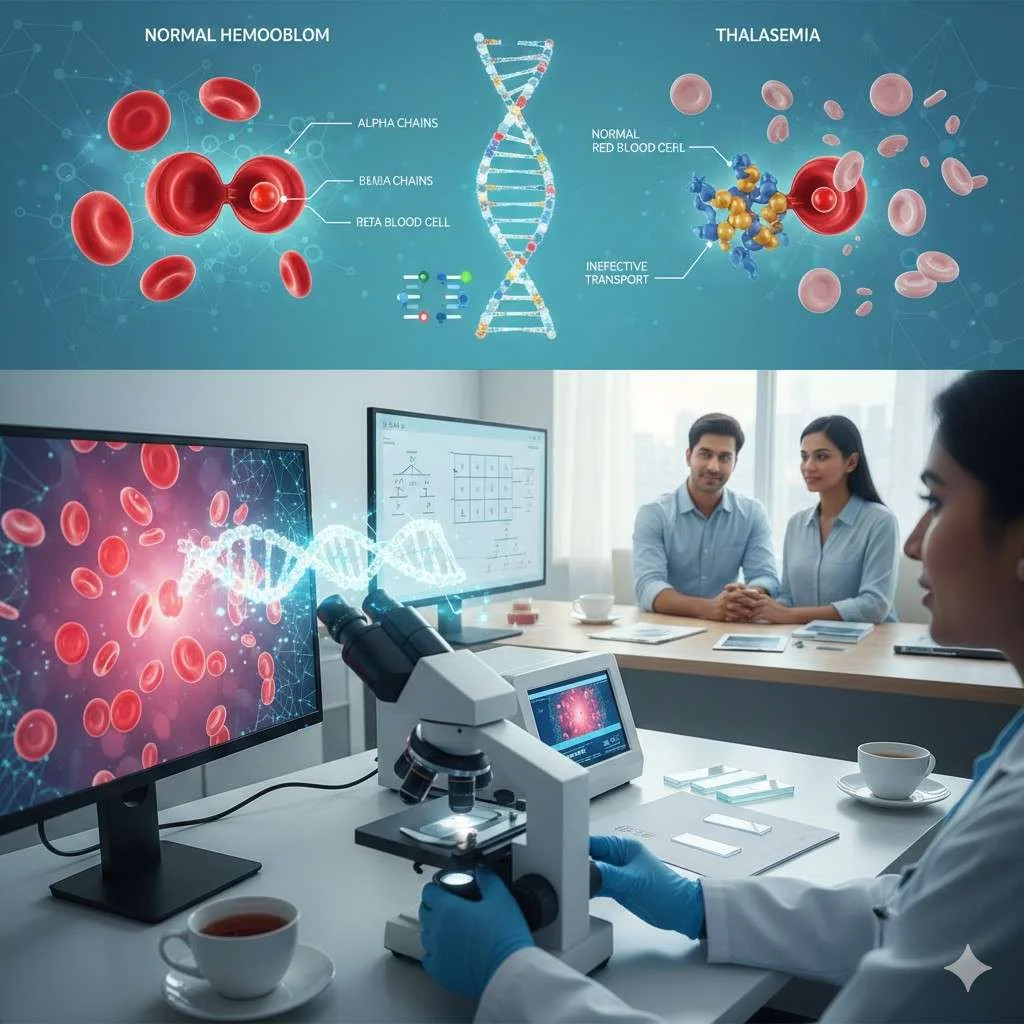
Classification of thalassemia and its forms is mostly determined by the chain of hemoglobin chain involved. Hemoglobin contains alpha and beta chains and issues in either of them curb various diseases.
Alpha Thalassemia
Alpha thalassemia arises in case of the missing or damaged genes of alpha hemoglobin chains. The level of severity is determined by the number of affected genes. Mild cases of alpha thalassemia can do away with any observable symptoms. The more serious manifestations may cause anemia swelling and pregnancy complications. Extremely it may be fatal to the fetus.
Beta Thalassemia
Beta thalassemia is a manifestation of lower or no production of beta hemoglobin chains. This kind is more diagnosed and researched. According to Beta thalassemia minor, mild anemia is often the result and it might not be noticed. Beta thalassemia major is extreme and may manifest itself in early childhood.
Patients usually require frequent blood transfusions in order to survive. One of the first things to understand is the fact that beta thalassemia major is potentially noticeable in the first two years of life and therefore early screening is essential.

Causes of Thalassemia
Genetic mutation is the primary cause of thalassemia and its types. These mutations are inherited and parents transmit them through inherited genes to children. When both parents are carriers of a thalassemia trait there are high chances that a child will have a severe form. That is why thalassemia is more prevalent in the regions where the marriage between the first cousins is the practice.
Thalassemia is not brought about by the environment. This disorder is not formed by diet lifestyle or infections though it may determine the severity of the symptoms.
Symptoms of Thalassemia
The symptoms can be different in various ways. Mild cases are not even evidenced whereas serious ones are debilitating. Symptoms common to it comprise chronic fatigue pale skin shortness of breath slow growth in children bone deformities and enlarged spleen. Extreme cases also entail frequent infections among patients. The symptoms usually become worse with time in case the condition is not treated. Frequent nursing is a way of preventing complications.
Risk Factors
There are a number of risk factors that lead to the probability of thalassemia and its varieties. The greatest risk factor is a family history of thalassemia. The ethnic background is also a factor because thalassemia is more common in the South Asia the Middle East Mediterranean areas and part of Africa. Close relative marriages increase the chances since both the spouses can be having the same genetic mutation without their knowledge.
Diagnosing Thalassemia
Diagnosis normally starts with complete blood count test that can indicate anemia. The diagnosis is supported by additional tests including hemoglobin electrophoresis and genetic testing. We suggest premarital or prenatal screening particularly in high risk areas. Early diagnosis helps families to be psychologically ready both in terms of finances and in terms of health.
Rhinoplasty is a cosmetic surgery that reforms or fixes the nose in order to enhance the balance of the face, breathing or both. It may be done either as cosmetic surgery, to enhance nose shape, size, or proportion, or as medical surgery, to address breathing difficulties due to a deviated septum.
Treatment of Thalassemia
The treatment varies based on the nature and severity of thalassemia.
Blood Transfusions
Major forms may need frequent blood transfusion in order to keep the levels of healthy hemoglobin. Although successful transfusion may result in iron overload when done without care.
Iron Chelation Therapy
The iron chelation therapy eliminates the excess amounts of iron in the body due to constant transfusions. The treatment assists in safeguarding vital organs such as the liver and the heart.
Drugs and Supplements.
There are also patients who respond to folic acid supplements that aid in the production of red blood cells. Iron supplements are not normally taken unless it is confirmed that one has iron deficiency.
Bone Marrow Transplant
The only possible treatment is bone marrow or stem cell transplant. It is most effective in those children who have an appropriate donor but is associated with considerable risks.
Living With Thalassemia
Balanced nutrition and emotional support in the form of frequent medical follow ups is necessary to live with thalassemia and its types. Most patients have full productive life when they are well cared of. We advise patients to remain active and be part of the decision making process of treatment. Counseling and support groups are also a significant issue in mental well being.
Prevention and Genetic Counseling
Prevention is based on awareness and genetic counseling. Maximally, before planning a family, couples should take into consideration genetic testing in case of a family history. We have observed the role of early counseling to minimize the cases of serious cases by making a well-informed reproductive decision.
Final Thoughts
Thalassemia and its types may initially be very daunting but education is everything. Once we learn the etiology of symptoms and management possibilities we are in control of the condition. In my opinion, early diagnosis and sensitive care may go a long way in enhancing patient and family outcomes. Thalassemia is a condition that we can deal with and not dread with the appropriate support.
People also ask
Is thalassemia curable
Most forms are manageable but not curable. Bone marrow transplant offers a potential cure in selected cases.
Can thalassemia patients live a normal life
Yes many patients lead normal lives with proper treatment monitoring and lifestyle adjustments.
Is thalassemia the same as iron deficiency anemia
No thalassemia is a genetic disorder while iron deficiency anemia is caused by lack of iron and requires different treatment.